by Christina Y.M. Chan
|
by Christina Y.M. Chan |
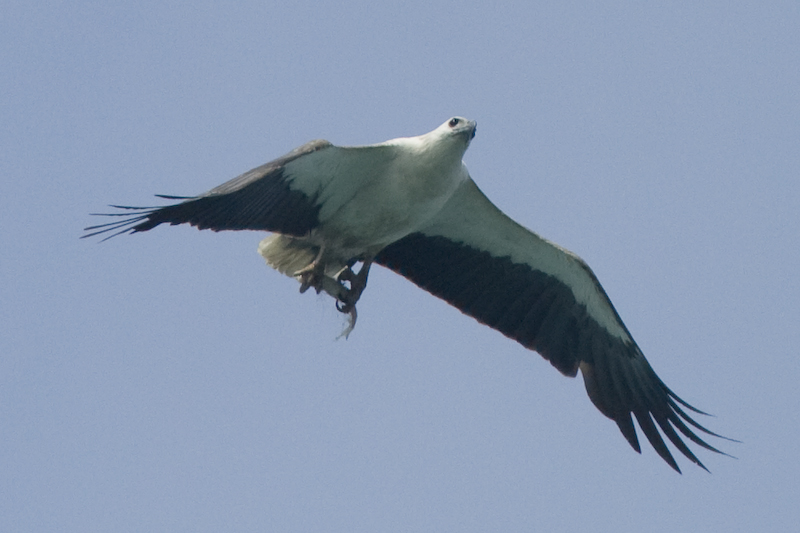
WBSE - a raptor appearing commonly at coastlines. They mainly distribute at Australia and SE Asia. HK and South China are at the northern edge of their natural range.
WBSE was considered as a rare raptor in Hong Kong, but in fact their population is quite stable in last decade. As they usually occur at the coastal area, they are not commonly encountered by the birdwatcher at inland woodland and northwest New Territories wetland. According to a survey in 2003, there were 8 breeding pairs, or 16 adults, in Hong Kong. Based on observation of this Study Group, there are now about 10 breeding pairs in recent years and on the steady side.
Despite the breeding pairs have not varied, the breeding successful rate is very unsteady. Based on the observation in Australia, the successful rate is about 80%. The survey data in Hong Kong indicate the local case is highly variable and the overall rate is lower than Australia.
|
The nest distribution in Hong Kong does not show their preference to marine zone. Their nesting sites can be found at the eastern waters, where the wind and wave are strong, as well as the western waters, where under the influx form Pearl River mixes with the sea water. Nevertheless, Sai Kung at the east is the hotspot of WBSE watching. After the breeding season, they may appear at areas away from the nesting site, and can be seen at inland reservoirs. When a pair of WBSE form a couple, their relationship will remain for years. They usually breed at the same location every year. Yet, there may be exception, and faithless behaviour has been observed. This has been rarely recorded in literatures, and the causes and frequencies have still to be observed. Every winter, they will return to the same location to build nest. Although it might not be the exact location or tree, they would faithful to same area. They build nests on trees, cliffs, and most peculiar at a pylon recently. |
.jpg)
by Samson So
|
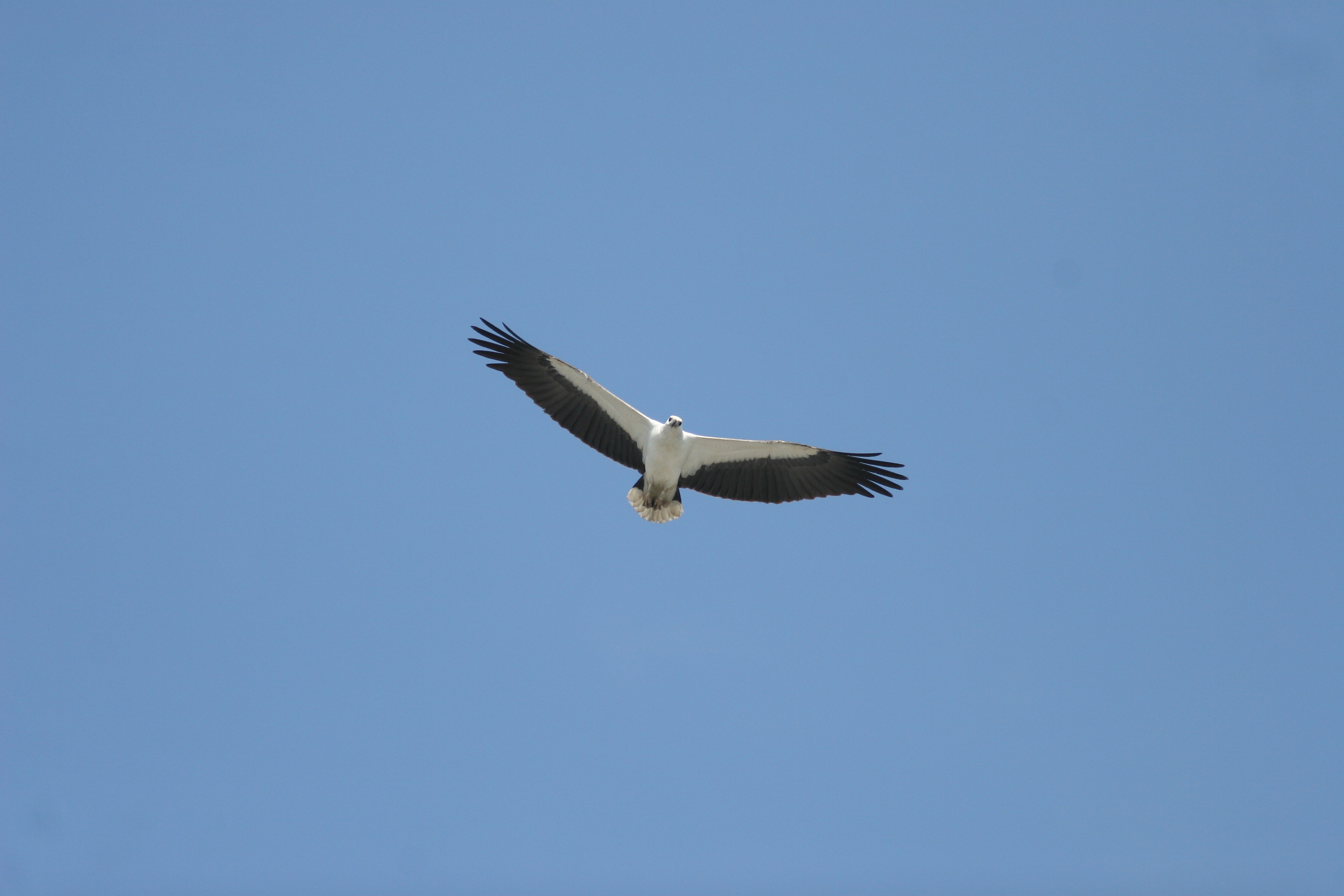
WBSE adult by Gary Chow |
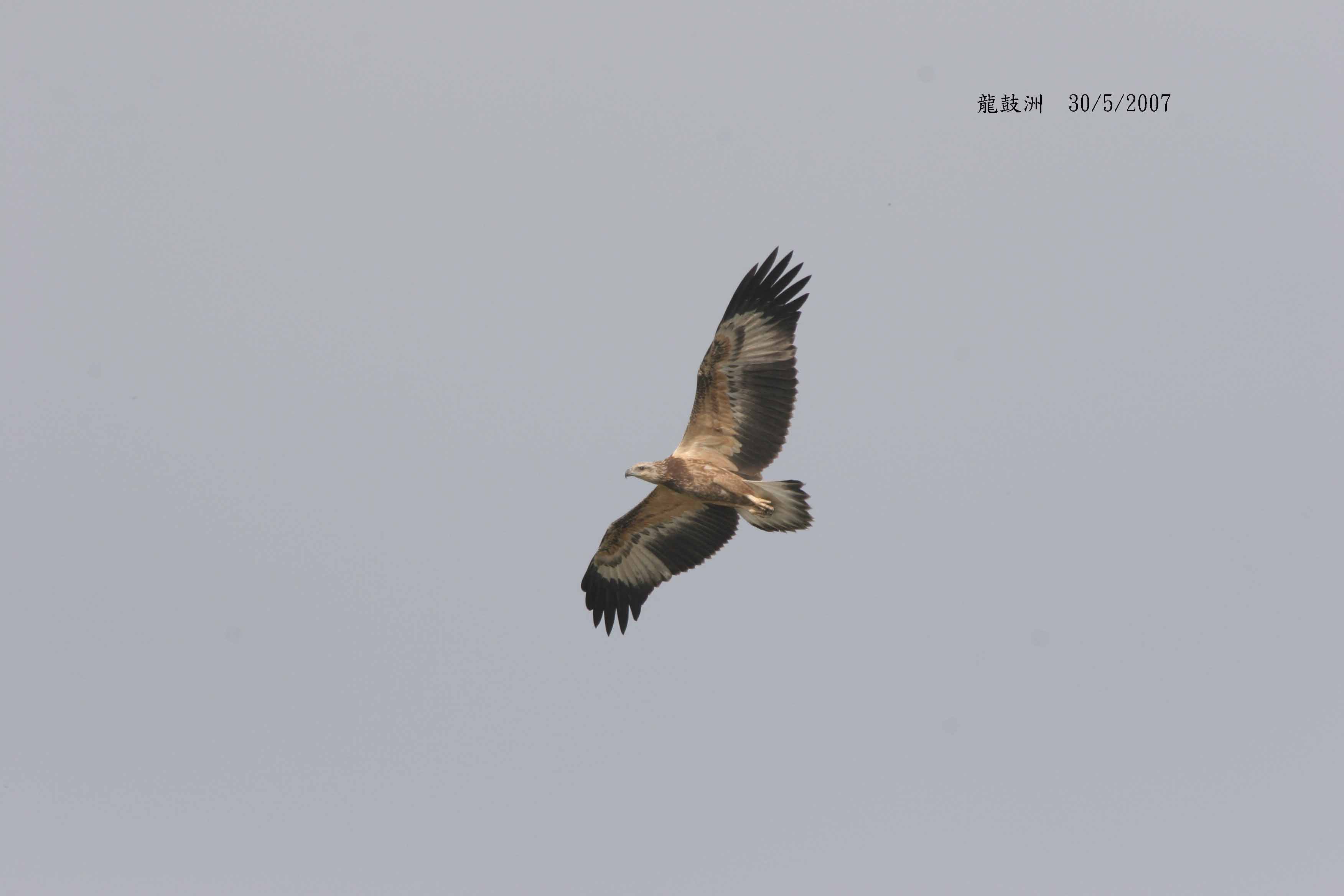
WBSE juvenile by M.Y. Tang
|
The successfully bred chicks would remain around the nest. Young chicks usually perch steadily and do not look smart. Because of their camouflage colour, they are not easily seen. They are also not good at catching fish at the beginning, and have to be looked after by their parents. Four months later, they start to be independent, and leave the nest to outer areas. The movements of the juveniles are still to be observed. Between July and December, we can occasionally see juveniles, but we are more likely to see adults than juveniles.
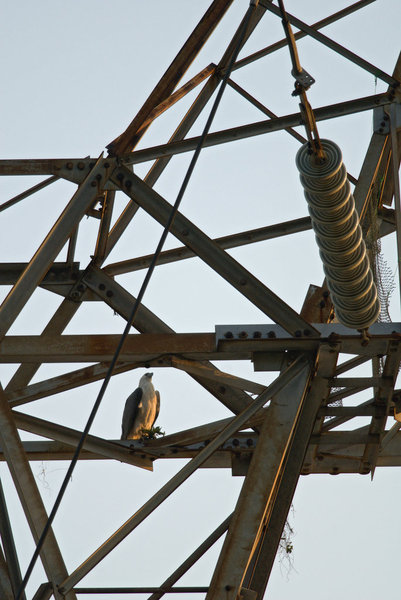
Electric pylon at Tin Wanby Peter Chan |
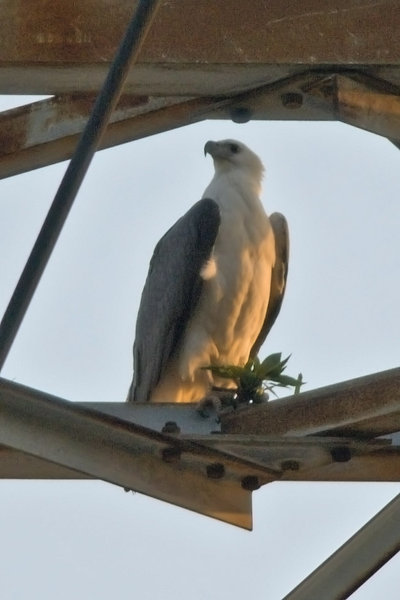
Electric pylon at Tin Wan by Peter Chan |
Disneyland development earlier aroused concerns about WBSE. Then, WBSE were considered a rare species of raptors, of particularly high conservation value, and there were only a limited number in Hong Kong. They received attention again recently because of a nesting site at an electric pylon at Tin Wan, which developments were reported widely by media. The knowledge on this local raptor is mostly limited to their appealing appearance, but not their intriguing ecology, despite it is used as the picture of the 10 cents stamp. Has the number decreased recently in Hong Kong? How many breeding pairs and the breeding successful rate? All these have inspired the formation of the WBSE study group, which wishes to find out more about their ecology through in-depth field observation.
If someone has any view or particular records on WBSE, he/she is welcome to inform us. Email: wbse@hkbws.org.hk