
Deep Bay’s Global Proportion Hits Historic Low; HKBWS Urges Enhanced Wetland Protection and Restoration
Global Population Hits New Peak of 7,746, Increasing by Nearly 10%
The HKBWS initiates the Census every January. This year’s census took place from 9 to 11 January 2026, mobilizing over 200 conservation experts and volunteers to count BFSs across 11 wintering regions along the flyway, including Hong Kong, Chinese Mainland, Macao, Taiwan, Republic of Korea, Japan, Vietnam, and the Philippines.
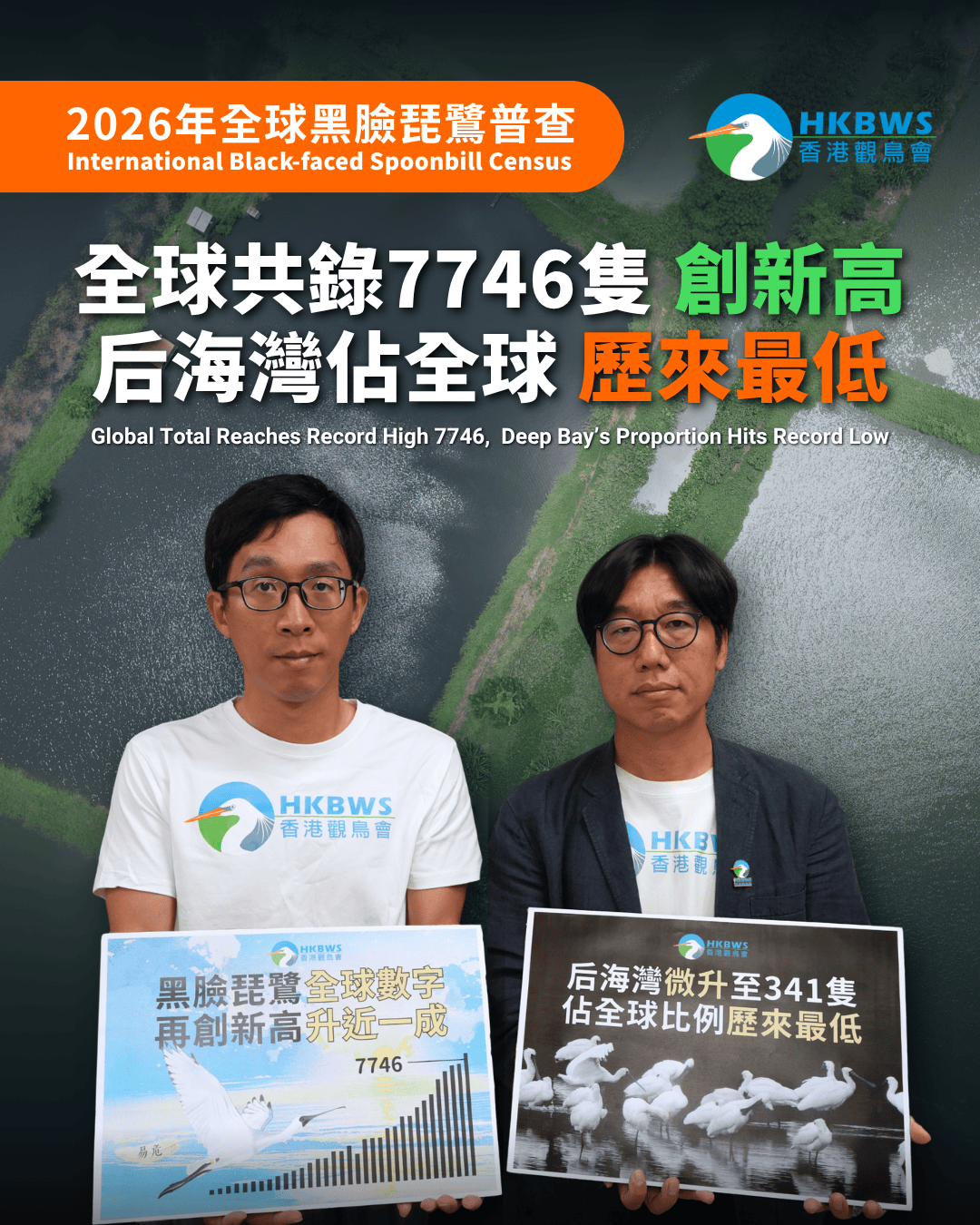
Census results show a global total of 7,746 BFSs, an increase of 665 individuals (+9.4%) from last year. Taiwan remains the world’s largest wintering ground with 4,719 individuals, a substantial increase of 13.2% (+550 individuals), accounting for 60.9% of the global total. Chinese Mainland, the second-largest site, saw stable growth with 1,834 birds, an increase of 9.8% (+163 individuals). Japan, in third place, recorded a decline to 593 individuals, a significant year-on-year decrease of 17.2%, likely due to unstable weather during the census. Notably, the Philippines recorded a total of 88 individuals, representing a four-fold increase (+71 individuals) from last year. This indicates a trend toward becoming an important wintering site and reflects the ongoing expansion of the species' distribution.
Three Decades of Regional Collaboration Leads to "Downlisting", while Potential Threats Remain
Yu Yat-tung, Director of HKBWS, stated: "The consecutive record-breaking numbers and the successful downlisting of the Black-faced Spoonbill are the fruits of over 30 years of regional collaboration. Long-term monitoring and census data have provided the most critical evidence for formulating precise conservation strategies. This success proves that to let an endangered species recover, we must collectively and continuously protect their habitats."
Despite the overall recovery, habitats face multiple threats. Regionally, the expansion of renewable energy facilities, such as solar farms and offshore wind farms, alongside the risk of avian diseases (e.g., botulism and avian influenza), cannot be ignored. These threats may be exacerbated by climate change, challenging the stability of the population's recovery.
Currently, over 60% of the global population is highly concentrated on a small number of wintering sites. "High concentration is unfavorable for the species in dealing with habitat loss, sudden disasters, or disease outbreaks," Yu explained. "A healthy and stable recovery should be accompanied by diversification of suitable sites. Our ultimate goal is a robust flyway network; therefore, we must protect every habitat along the migration route to spread the risk. As a critical midpoint, Deep Bay must continuously enhance its habitat quality to safeguard the expansion and stability of the population."
HKBWS is currently working with international experts to revise the International Single Species Action Plan (ISSAP) for BFS, which is expected to be officially released this year. The plan will provide guidance for global conservation efforts over the next decade.
Deep Bay Share Hits Record Low as Growth Reaches Bottleneck, Prompting Calls for Active Management
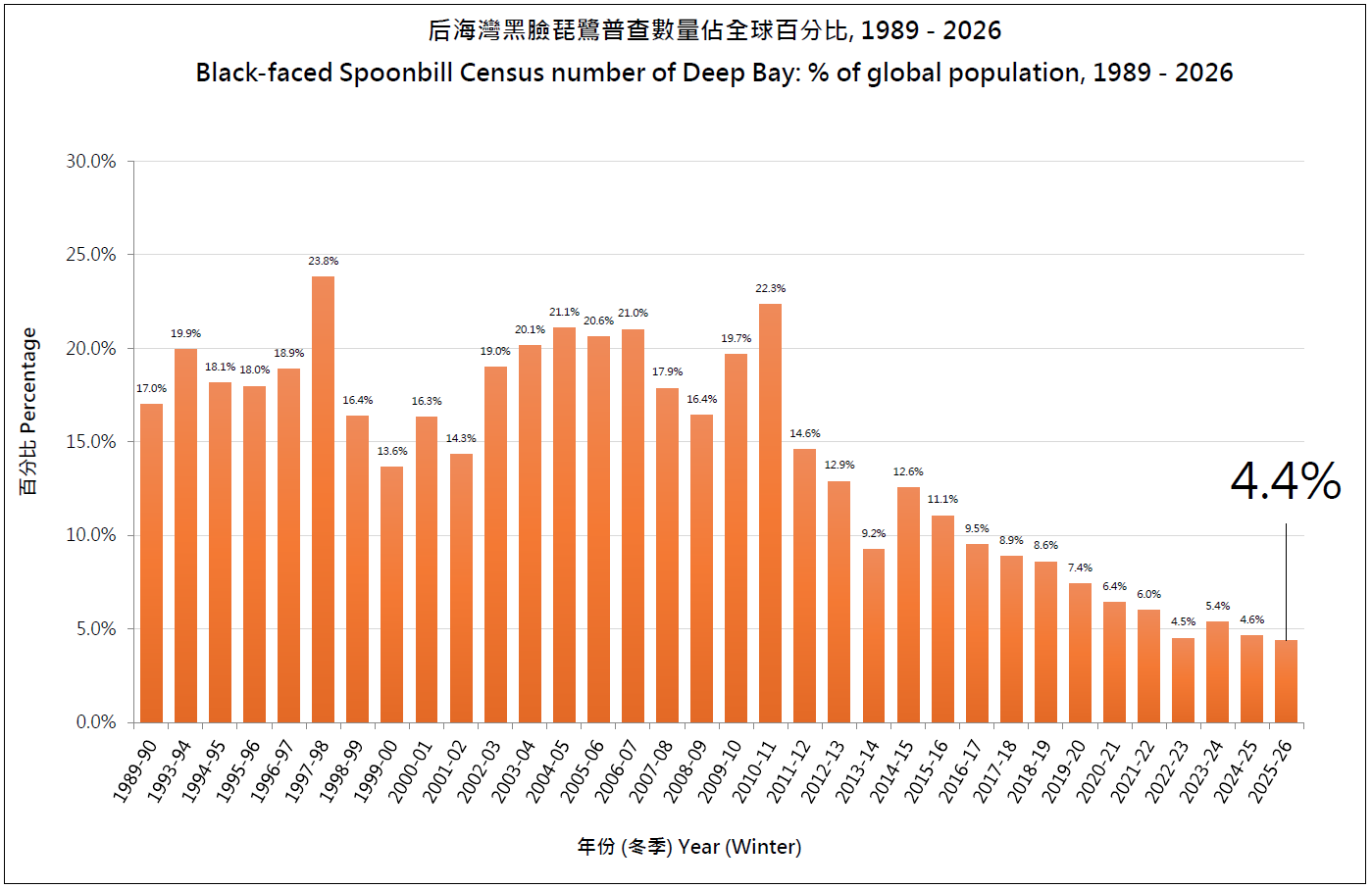
Deep Bay recorded 341 individuals this year, a slight increase of 13 individuals (+4.0%). Yu pointed out that the local population has hovered around 300 for a decade, failing to surpass the peak of 411 recorded ten years ago. "Fifteen years ago, Deep Bay’s global share was as high as one-fifth. In contrast, while the global population has quadrupled, Deep Bay’s numbers have reached a bottleneck, with its share shrinking to a historic low of 4.4%. This is a very clear warning signal that we need to enhance the attractiveness of our local wetlands," warned Yu.
Yu further stated that Hong Kong should promptly expand of the Ramsar Site to include the proposed Wetland Conservation Park system, covering Sam Po Shue, Fung Lok Wai, Nam Sang Wai, Ma Tso Lung, and Lau Fau Shan to Ha Pak Nai. This ensures that overall planning follows the "Conservation First" principle and contributes to national ecological civilization and wetland protection policies.
To support the global recovery, Hong Kong should adopt a conservation-based approach to actively manage foraging and roosting habitats. Jay Kong, Research Officer of HKBWS, noted that tracking of a tagged spoonbill, 'A56,' earlier this year revealed its habit of frequently moving between fishponds in Lok Ma Chau, San Tin, and Ma Tso Lung. These results reflect the vital importance of traditional fishponds and the wetland integrity of the entire Deep Bay area in supporting the species. Yu Yat-tung recommended strong support for eco-friendly fishpond management and the promotion of sustainable fisheries, while strictly preventing wetland destruction and habitat fragmentation to attract more wintering Black-faced Spoonbills to Hong Kong.
Furthermore, as mudflats and inland waterways in Deep Bay face increasing terrestrialization and the invasion of exotic mangrove Sonneratia, HKBWS calls for the full implementation of Sonneratia removal and the integration of mudflat restoration into management plans.
Inaugural International Black-faced Spoonbill Day with Nine Public Events Across Shenzhen, Hong Kong, and Macau
To celebrate the conservation success, experts reached a consensus during the International Meeting on Black-faced Spoonbill Conservation to designated the third Saturday of March as the International Black-faced Spoonbill Day. This initiative aims to strengthen public awareness of wetlands and migratory birds while sustaining momentum for future conservation efforts.
The inaugural celebration will be held tomorrow, 21 March 2026. Various regions along the flyway, including Japan, and South Korea, will participate in synchronization. In local and neighboring areas, conservation groups across Shenzhen, Hong Kong, and Macao will launch nine public events, including the "BFS Record and Photography eBird Challenge", workshops, and guided tours, inviting the public to join this global conservation event.
Figure 1: International Black-faced Spoonbill Census result, 1989-2026
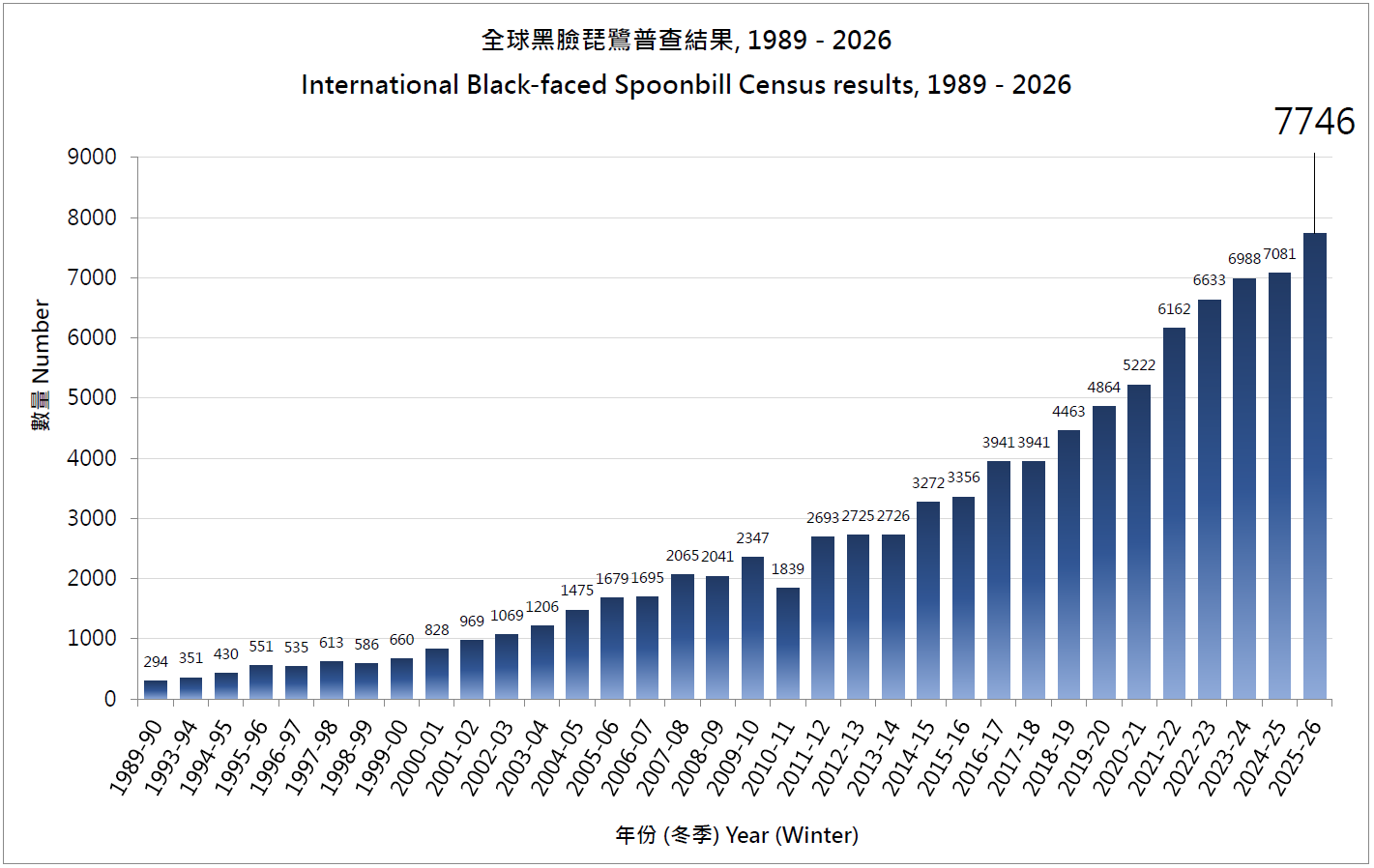
Figure 2: Black-faced Spoonbill Census result of Deep Bay, 1989-2026
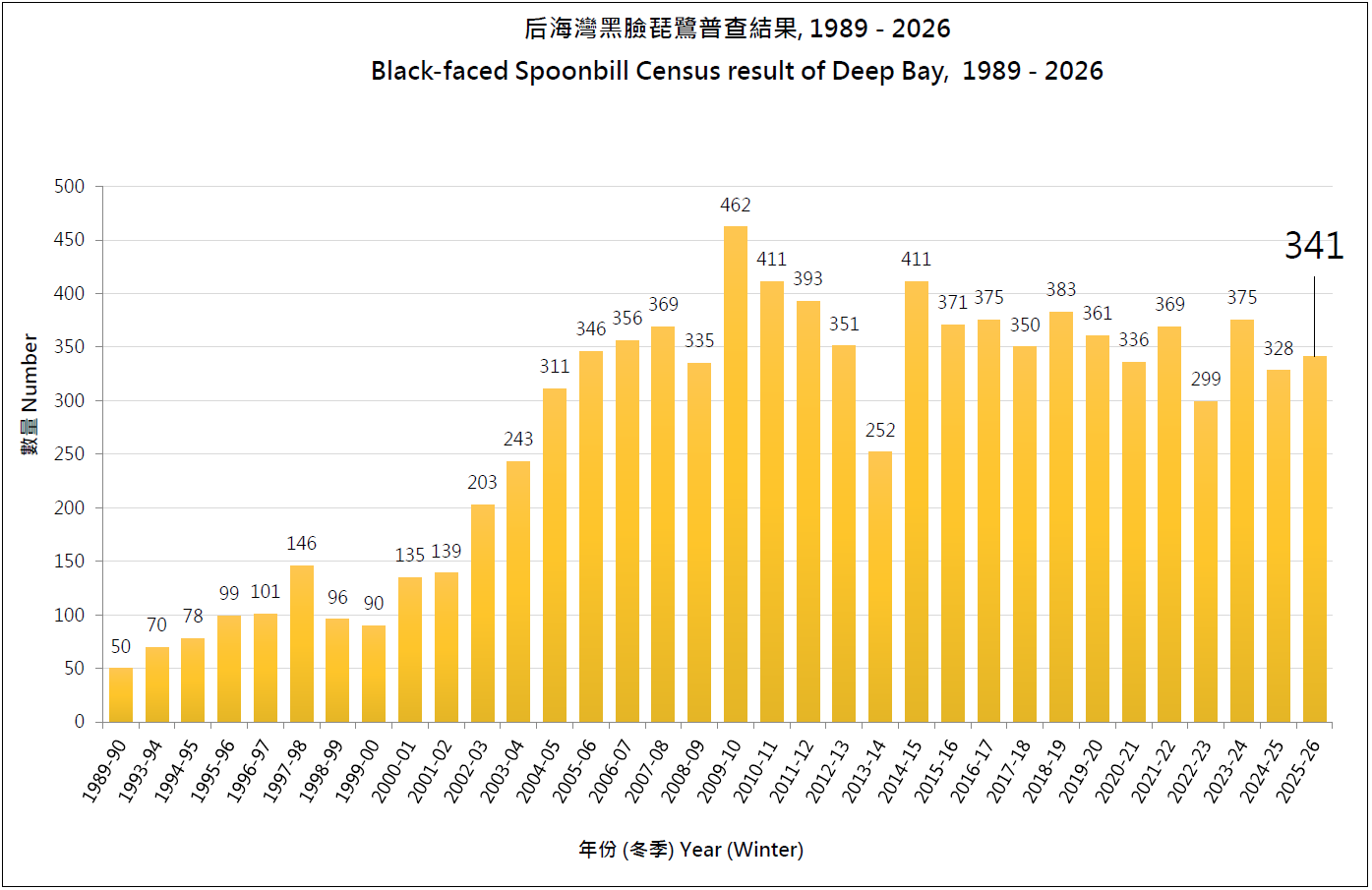
Figure 3: Results of different sites in 2026 Census
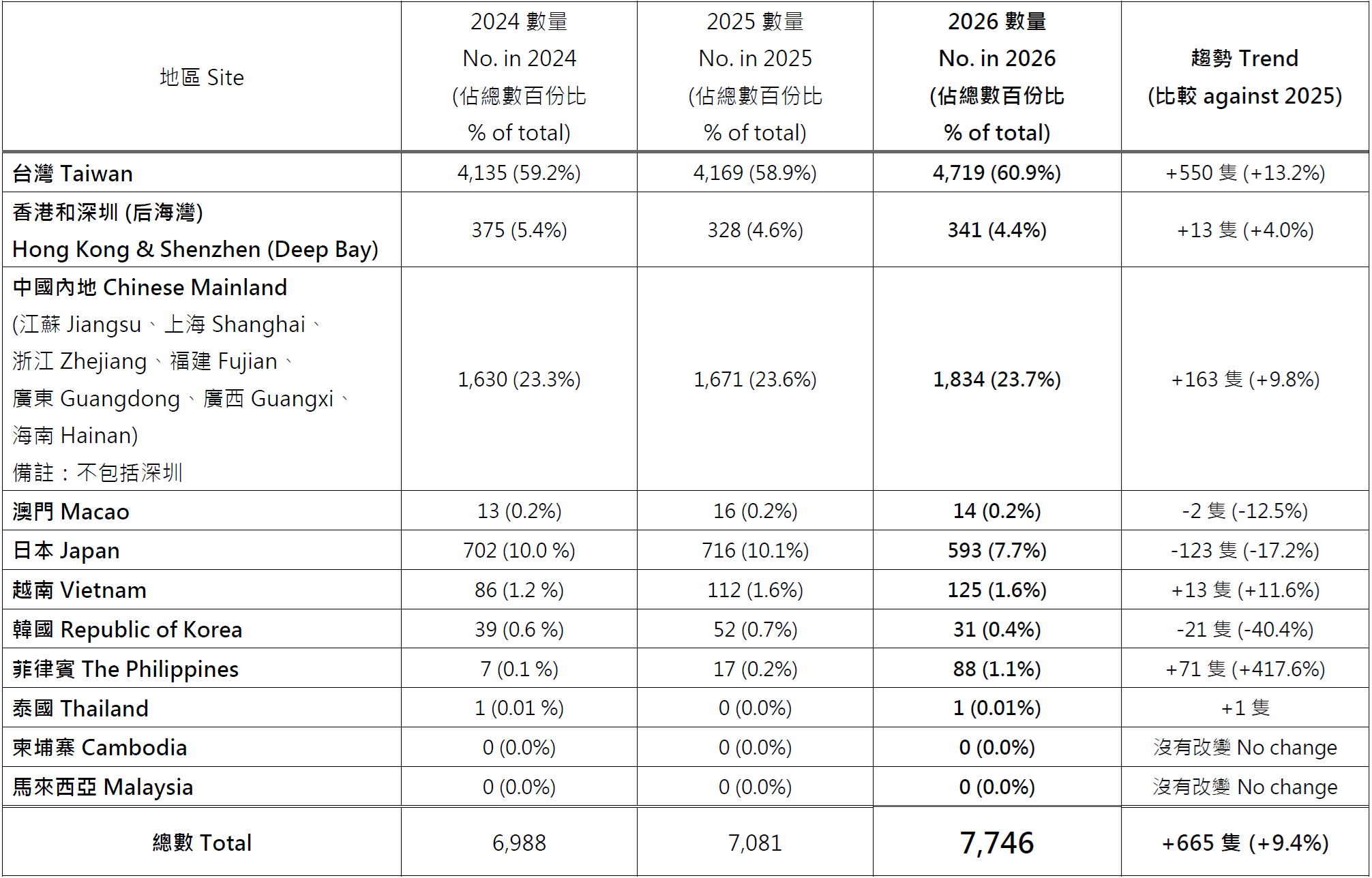
Figure 4: Black-faced Spoonbill Census result of Deep Bay: % of global population, 1989-2026